HBU Meaning in Text: What It Really Means & How to Use It Naturally
If you’ve ever been texting someone and suddenly received “HBU?”, you’re not alone in pausing for a second and wondering what it means. It’s one of those short, casual phrases that show up everywhere—WhatsApp chats, Instagram DMs, even TikTok comments.
People search for “hbu meaning in text” because it’s not always obvious from context, especially if you’re new to internet slang or communicating with someone from a different age group or culture.
At its core, “HBU” is simple. But the way it’s used can reveal tone, emotion, and even relationship dynamics. Understanding it properly helps you respond more naturally—and avoid awkward misunderstandings.
Let’s break it down in a way that feels real, practical, and easy to use in everyday conversations.
HBU Meaning in Text – Quick Meaning
HBU = “How About You?”
It’s a short way of turning the conversation back to the other person after sharing something about yourself.
Simple breakdown:
- Used to ask the other person the same question
- Keeps conversations flowing
- Sounds casual and friendly
Examples:
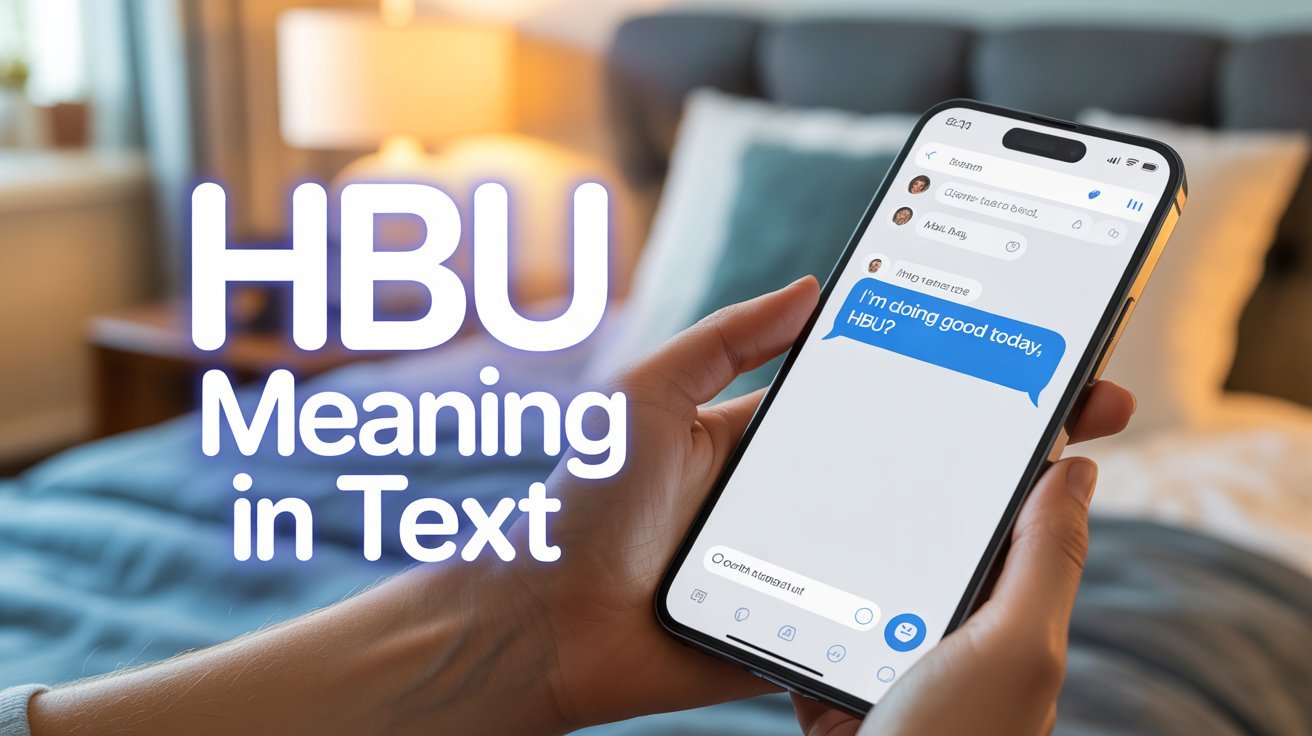
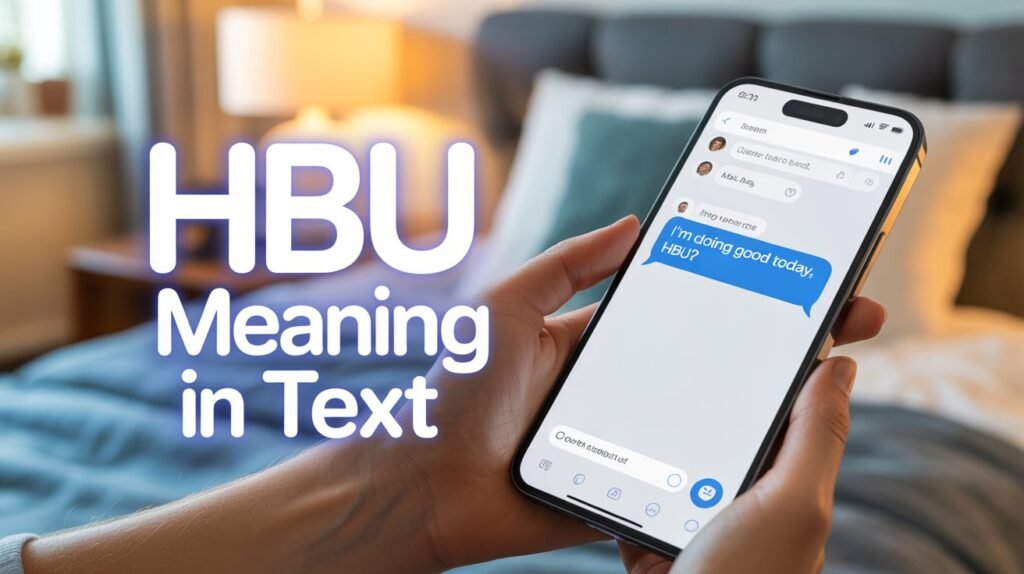
- “I’m doing good today, hbu?”
- “I like coffee more than tea, hbu?”
- “I’m staying home tonight, hbu?”
It’s basically a conversational handoff—like saying, “Your turn.”
Origin & Background
“HBU” comes from early internet chat culture, where speed mattered more than perfect grammar. Platforms like MSN Messenger, AOL chat rooms, and SMS texting pushed people to shorten everything.
Over time, abbreviations like:
- LOL (laugh out loud)
- BRB (be right back)
- WYD (what you doing)
became normal—and “HBU” naturally joined that list.
Social Media Influence
As platforms like Instagram, Snapchat, and TikTok grew, communication became even faster and more informal. People didn’t want to type full sentences when a quick abbreviation could do the job.
“HBU” evolved into:
- A conversational shortcut
- A sign of casual tone
- A way to avoid sounding too formal or distant
Today, it’s widely understood across global internet culture—even if English isn’t someone’s first language.
Real-Life Conversations (How It’s Actually Used)
1. WhatsApp Chat
Person A: I just finished my exams, finally free 😌
Person B: Nice! I still have one left 😭 hbu how did yours go?
Person A: Honestly, better than I expected
2. Instagram DM
Person A: Your trip looked amazing
Person B: It really was! I needed that break, hbu?
Person A: I’ve just been stuck with work lately
3. TikTok Comments
User 1: I listen to music when I’m stressed
User 2: Same here, hbu?
User 3: I go for walks, helps clear my mind
4. Text Message
Person A: I’m bored today
Person B: Same 😩 hbu wanna do something?
Person A: Maybe, what do you have in mind?
These examples show how naturally “HBU” fits into everyday conversation—it’s almost invisible once you get used to it.
Emotional & Psychological Meaning
On the surface, “HBU” is just a question. But emotionally, it does something deeper.
It shows:
- Interest in the other person
- Willingness to continue the conversation
- A balanced, two-way interaction
Without it, a conversation can feel one-sided. Imagine someone saying:
“I had a great day.”
And then… nothing.
Now compare that to:
“I had a great day, hbu?”
That small addition invites connection.
A Real-Life Scenario
You message a friend after a long day:
“I’m exhausted today, work was crazy.”
They reply:
“Same here 😩 hbu?”
Even though they’re also tired, they still ask about you. That small effort makes you feel heard—and that’s the emotional value behind “HBU.”
Usage in Different Contexts
Social Media
Used casually in comments, captions, and DMs. It keeps things light and interactive.
Example:
“Just finished a workout 💪 hbu?”
Friends & Relationships
Very common. It feels natural and friendly.
Example:
“I miss you, hbu?”
Work / Professional Settings
Use with caution. It can sound too informal.
Instead of:
“I completed the report, hbu?”
Better:
“I’ve completed the report. How about you?”
Casual vs Serious Tone
- Casual: Perfect fit
- Serious conversations: Can feel too relaxed or dismissive
Tone always depends on context.
When NOT to Use It
There are moments where “HBU” can feel out of place.
Avoid in:
- Formal emails
- Job interviews
- Serious emotional discussions
- Professional reports
Why?
Because it may:
- Sound careless
- Reduce emotional depth
- Feel disrespectful in serious moments
Example of poor use:
“I heard about your loss, hbu?”
That feels emotionally disconnected.
Common Misunderstandings
1. Thinking It Has a Hidden Meaning
It doesn’t. It simply means “How about you?”
2. Tone Confusion
Sometimes it may seem:
- Dry
- Uninterested
But usually, it’s just neutral.
3. Overuse
Using “HBU” in every message can make conversations feel repetitive or lazy.
Comparison Table
| Expression | Meaning | Tone | Usage |
| HBU | How about you? | Casual | Everyday chats |
| WYD | What are you doing? | Curious | Starting conversation |
| WBU | What about you? | Similar to HBU | Slight variation |
| And you? | Same meaning | Neutral | More formal |
| IDC | I don’t care | Opposite tone | Dismissive |
| Tell me about you | More detailed | Engaging | Deeper conversations |
Key Insight
“HBU” isn’t just about asking a question—it’s about maintaining balance in conversation. It keeps communication flowing without feeling forced or formal.
Variations / Types
- HBUU – Extended for emphasis or friendliness
- Hbu? – Standard lowercase casual usage
- HBU 🙂 – Softer, friendly tone
- HBU lol – Playful and relaxed
- HBU then? – Slightly more direct
- HBU bro – Informal, friendly
- HBU tho – Adds curiosity or doubt
- HBU rn – “How about you right now?”
- HBU guys – Addressing a group
- HBU?? – Stronger curiosity
How to Respond When Someone Uses It
Casual Replies
- “Same here honestly”
- “Not much, just chilling”
Funny Replies
- “Living my best life… in bed 😅”
- “Surviving, barely 😂”
Mature Replies
- “I’ve been focusing on work lately”
- “Trying to improve my routine”
Respectful Replies
- “I’m doing okay, thank you for asking”
- “Things have been a bit busy, but good overall”
Regional & Cultural Usage
Western Culture
Very common. Seen as normal everyday slang.
Asian Culture
Used mostly by younger audiences familiar with English internet slang.
Middle Eastern Culture
Common in online conversations, especially among youth mixing English with native languages.
Global Internet Usage
“HBU” has become universal. Even non-native speakers understand it through exposure.
Generational Differences
- Gen Z: Uses it naturally and frequently
- Millennials: Comfortable but may switch to full phrases
- Older generations: Less likely to use it
Is It Safe for Kids?
Yes, “HBU” is completely safe.
It doesn’t carry any inappropriate meaning. However, context still matters. Kids should understand when casual language is appropriate—and when a more respectful tone is needed.
FAQs
1. What does HBU mean in texting?
It means “How about you?”—a way to ask the other person the same question.
2. Is HBU rude?
No. It’s neutral and friendly, depending on tone and context.
3. Can I use HBU in formal writing?
Not recommended. Use “How about you?” instead.
4. What’s the difference between HBU and WBU?
Both mean the same. “WBU” stands for “What about you?”
5. Why do people use HBU?
To keep conversations balanced and interactive without typing full sentences.
6. Is HBU only used by young people?
Mostly, but it’s understood by peo*ple of all ages online.
7. Can HBU be misunderstood?
Sometimes, if tone is unc*lear—but generally, it’s straightforward.
Conclusion
“HBU” may look like just another internet abbreviation, but it plays a small yet pow*erful role in modern communication.
It keeps conve*rsations alive. It shows inte*rest. It creates bala*nce.
In a world where attention spans are short and messages are quick, something as simple as “HBU” can make interactions feel more human.
Use it when the moment is casual. Avoid it when the situation calls for depth. And most importantly, understand the intention behind it—not just the words.
Once you do, you’ll never hesitate when you see “HBU?” again.