OTS Meaning in Text: What Does OTS Mean in Texting and Online Chat?
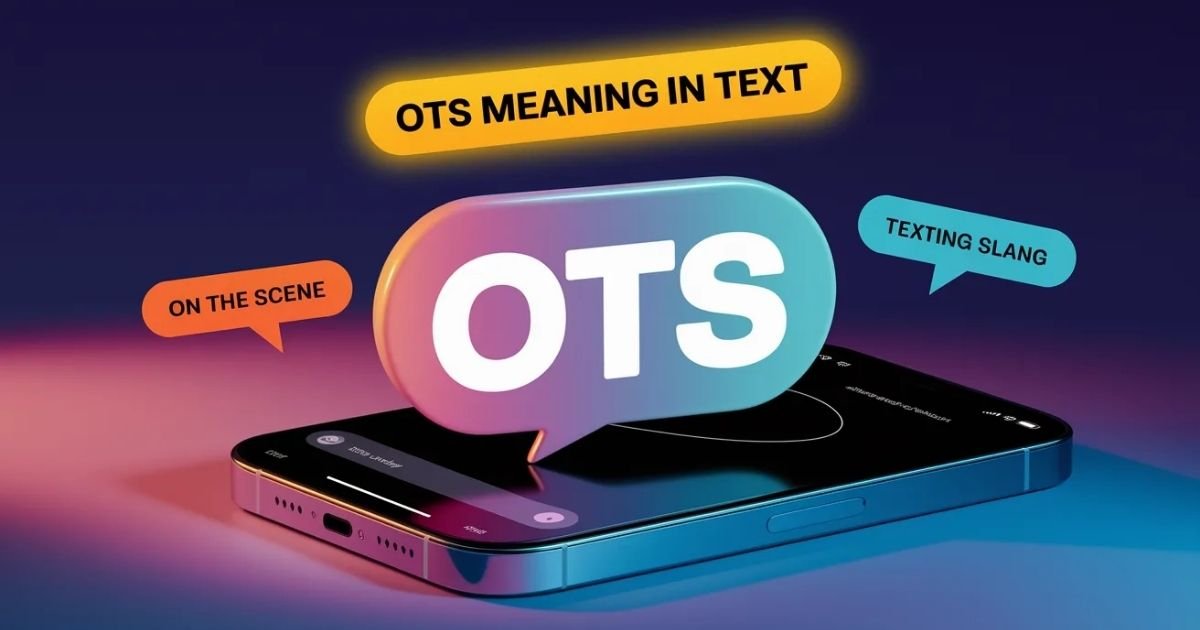
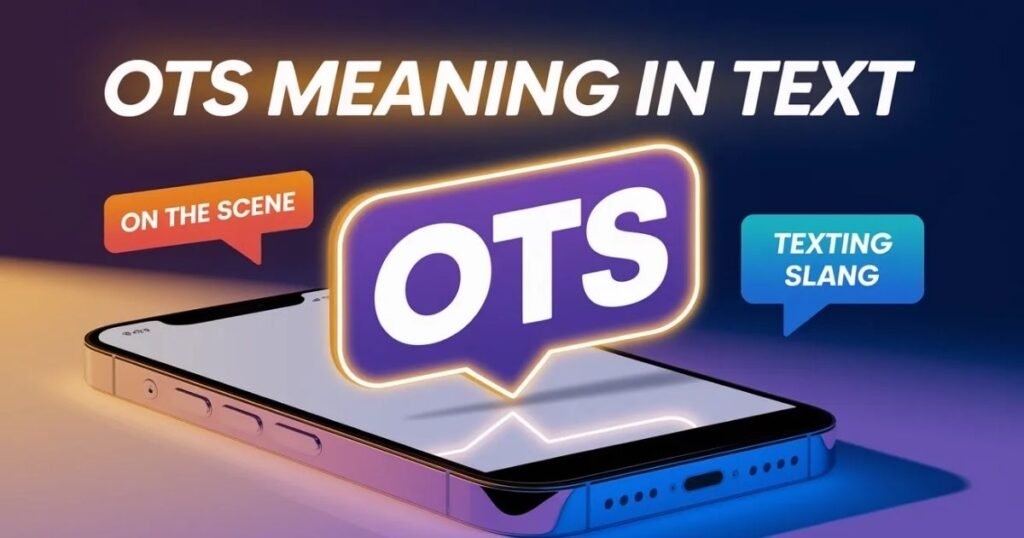
OTS means “On The Scene” in text messages and online chat. It’s a casual internet slang term people use to tell others they’ve arrived at a location or are present at an event happening right now.
If you’ve ever received a text with “OTS” and wondered what it meant, you’re not alone. This acronym has become increasingly popular across messaging apps, social media platforms, and texting conversations. In this comprehensive guide, we’ll explore everything you need to know about OTS—from its meaning and usage to real-world examples and tips for using it correctly.
What Does OTS Mean in Text Messages?
OTS stands for “On The Scene” in most texting contexts. When someone sends you “OTS,” they’re essentially saying they’ve arrived at a specific place or are currently present where something is happening.
The term carries a sense of immediacy and real-time presence. It’s like saying “I’m here now” but in a quicker, more informal way that fits the fast-paced nature of digital communication.
Other Possible Meanings of OTS
While “On The Scene” is the most common meaning in casual texting, OTS can occasionally stand for:
- Off The Shoulder (fashion context)
- On The Side (when ordering food or discussing arrangements)
- Over The Shoulder (in gaming or photography)
- On The Spot (meaning immediately or right away)
However, in everyday text conversations, “On The Scene” is by far the dominant interpretation, especially among younger users and in social coordination contexts.
ALSO READ: HMB Meaning in Text: What “Hit Me Back” Really Means
OTS Meaning on Snapchat, Instagram, and TikTok
On social media platforms like Snapchat, Instagram, and TikTok, OTS maintains its primary meaning of “On The Scene.”
Snapchat Usage
On Snapchat, users often send “OTS” when they arrive at a party, concert, or meetup spot. They might pair it with a snap showing their current location or the event they’re attending. For example, someone might post a snap of a concert venue with the caption “OTS 🎵” to let their friends know they’ve arrived.
Instagram Usage
Instagram users typically use OTS in:
- Direct messages coordinating meetups
- Story captions when posting from events
- Comments on posts about ongoing activities
TikTok Usage
On TikTok, OTS appears in:
- Video captions describing real-time situations
- Comments on trending event videos
- Messages coordinating creator meetups
The platform-specific usage remains consistent: announcing real-time presence at a location or event.
Is OTS Formal or Informal Language?
OTS is decidedly informal. This acronym belongs firmly in the casual texting and online chat category. You wouldn’t use it in professional emails, formal presentations, or business communications.
When to Use OTS
✅ Appropriate contexts:
- Texting friends about meeting up
- Social media posts about events
- Casual group chats
- Coordinating plans with peers
- Informal online conversations
When to Avoid OTS
❌ Inappropriate contexts:
- Professional emails
- Work-related messages to supervisors
- Formal written documents
- Academic papers
- Business presentations
- Communication with people unfamiliar with internet slang
Real-Life Texting Examples of OTS
Understanding how OTS works in actual conversations helps you use it naturally. Here are real-world examples:
Example 1: Arriving at a Party
Friend 1: “You coming to Sarah’s party?”
Friend 2: “OTS right now! Where is everyone?”
Friend 1: “Backyard, come around the side”
Example 2: Concert Meetup
You: “The opening act just started!”
Friend: “OTS! Look for me near the merch table”
Example 3: Emergency Situation
Person 1: “There’s a huge accident on Main Street”
Person 2: “I saw it! OTS and it looks serious”
Person 1: “Stay safe”
Example 4: Group Coordination
Group Chat:
Alex: “OTS at the coffee shop”
Jamie: “Be there in 5”
Morgan: “Already inside, saved us a table”
Example 5: Event Coverage
Text: “The protest just started downtown. OTS covering it for the school paper”
Grammar and Usage: How OTS Functions in Sentences
Part of Speech
OTS functions as an adverbial phrase in sentences. It modifies the verb or the entire sentence to indicate when and where the action is taking place.
Sentence Position
OTS typically appears:
- At the beginning of a message (most common)
- “OTS at the mall”
- “OTS, traffic is crazy”
- At the end of a statement
- “I’m at the stadium OTS”
- “Made it to the beach OTS”
- As a standalone response
- Person 1: “You there yet?”
- Person 2: “OTS”
Tone and Connotation
The tone of OTS is:
- Immediate and urgent – suggests real-time communication
- Casual and friendly – maintains an informal vibe
- Confident – announces presence authoritatively
- Engaged – shows active participation
OTS vs. Similar Terms: Understanding the Differences
Many texting acronyms sound similar or have related meanings. Here’s how OTS compares to commonly confused terms:
| Acronym | Meaning | Context | Key Difference |
| OTS | On The Scene | Announcing arrival/presence | Emphasizes physical presence at location |
| OMW | On My Way | Traveling to location | Indicates movement toward destination |
| OTW | On The Way | Currently traveling | Same as OMW, still in transit |
| OTSS | On The Same Subject | Continuing topic | Used in discussions, not about location |
| OT | Off Topic | Changing conversation subject | Conversation management, not location-based |
| OTP | One True Pairing | Favorite fictional couple | Completely different context (fandom) |
| IRL | In Real Life | Physical world vs. online | Describes type of interaction, not arrival |
| ATM | At The Moment | Right now/currently | Time indicator, not location-specific |
Key Distinction: OTS vs. OMW
The most common confusion occurs between OTS and OMW (On My Way):
- OMW = Still traveling, haven’t arrived yet
- OTS = Already arrived, currently present
Example:
- 7:45 PM: “OMW, leaving my house now”
- 8:00 PM: “OTS, where are you sitting?”
Who Uses OTS? Demographics and Platforms
Age Groups
Primary users:
- Gen Z (ages 12-27): Heavy users across all platforms
- Younger Millennials (ages 28-35): Regular users in casual contexts
- Older Millennials (ages 36-43): Occasional users, mainly with peers
Less common among:
- Gen X and Baby Boomers (typically prefer full phrases)
Geographic Distribution
OTS is primarily used in:
- United States: Very common, especially in urban areas
- United Kingdom: Increasingly popular among young people
- Canada: Widespread among teens and young adults
- Australia: Growing usage in youth demographics
- Other English-speaking countries: Moderate to growing adoption
Platform Preferences
Most common on:
- Snapchat (high usage for real-time updates)
- Instagram DMs and Stories
- Text messages (SMS)
- TikTok comments and captions
- Discord (gaming and community servers)
- Twitter/X (event coverage)
Regional Variations and Alternative Expressions
While OTS is fairly universal in English-speaking online communities, some regions have their own preferred alternatives:
UK Alternatives
- “Here now” (more common in British texting)
- “Arrived” (more formal)
US Alternatives
- “I’m here” (universal)
- “Just pulled up” (casual, especially common in African American Vernacular English)
- “Made it” (completion emphasis)
Australian Alternatives
- “I’m at yours” (when arriving at someone’s place)
- “Here mate” (casual)
Despite these alternatives, OTS has been gaining ground globally due to its brevity and clarity.
Common Mistakes and How to Avoid Them
Mistake 1: Using OTS When Still Traveling
❌ Wrong: “OTS, be there in 10 minutes”
✅ Correct: “OMW, be there in 10 minutes”
Why: OTS means you’ve already arrived, not that you’re on your way.
Mistake 2: Using OTS in Formal Contexts
❌ Wrong: “Dear Professor Smith, I’m OTS at your office for our meeting”
✅ Correct: “Dear Professor Smith, I’ve arrived at your office for our meeting”
Why: OTS is too casual for professional communication.
Mistake 3: Assuming Everyone Knows OTS
❌ Wrong: Texting “OTS” to your grandmother without context
✅ Correct: “I’m here at the restaurant now”
Why: Not everyone is familiar with texting acronyms, especially older generations.
Mistake 4: Confusing OTS with OTP
❌ Wrong: “My OTS is Captain America and Iron Man” (meaning favorite pairing)
✅ Correct: “My OTP is Captain America and Iron Man”
Why: OTS and OTP are completely different acronyms with unrelated meanings.
How to Respond When Someone Sends You OTS
When someone texts you “OTS,” here are appropriate responses based on context:
you’re meeting them:
- “Great! I’ll be there in 5”
- “Where exactly are you?”
- “Look for my car, I’m in the parking lot”
If you’re already there:
- “Me too! Where are you?”
- “I’m by the entrance”
- “I see you!”
you’re not going:
- “Nice! Have fun”
- “Cool, let me know how it goes”
- “Send pics!”
The Evolution of OTS in Digital Communication
OTS emerged as part of the broader trend toward brevity in digital communication. As smartphones became ubiquitous and texting speeds increased, users naturally gravitated toward shortcuts that conveyed information quickly without sacrificing clarity.
The rise of location-based social apps like Snapchat and Instagram Stories, which emphasize real-time sharing, has further boosted OTS usage. These platforms reward immediacy, making “On The Scene” particularly relevant.
Interestingly, OTS has also been adopted by citizen journalists and independent content creators who use it to signal they’re covering live events everything from protests to concerts to breaking news situations.
SEO-Friendly FAQs About OTS
What does OTS mean?
OTS means “On The Scene” in texting and social media, indicating someone has arrived at a location or event right now.
What are OTS messages?
OTS messages are texts announcing arrival at a location, like “OTS at the party,” used for coordinating plans with friends informally.
What is OTS in social media?
OTS on social media means “On The Scene,” showing you’re physically present at events when posting real-time content or live updates.
What does OTS mean in texting?
OTS means “On The Scene” in texting. It’s used to tell someone you’ve arrived at a location or are present at an event that’s currently happening.
Is OTS the same as OMW?
No. OMW means “On My Way” while traveling; OTS means “On The Scene” after arrival. They indicate different travel stages completely.
What does OTS mean on Snapchat?
On Snapchat, OTS means “On The Scene,” used when arriving at events, parties, or locations to notify friends in real-time updates.
Can OTS mean anything else besides “On The Scene”?
Yes. OTS can mean “Off The Shoulder,” “On The Side,” or “Over The Shoulder,” but “On The Scene” is most common.
Is it professional to use OTS in work emails?
No. OTS is informal slang unsuitable for professional emails or business communication. Use “I’ve arrived” or similar formal phrases instead.
Who typically uses OTS?
Gen Z and younger Millennials use OTS most, particularly on Snapchat, Instagram, TikTok, and text messages when coordinating social activities.
How do you use OTS in a sentence?
Use OTS at message start or end: “OTS at the concert!” or “Made it, OTS.” Also works standalone answering location questions.
What’s the difference between OTS and IRL?
OTS announces arrival at a location; IRL refers to physical world versus online. OTS is location-based; IRL describes interaction type.
What is OTS in text?
OTS in text means “On The Scene,” used when someone has arrived at a place or event. It shows they are present there right now.
What is OTS in social media?
On social media, OTS is used to show real-time presence at an event or location. People use it in posts, stories, or messages.
What does OTS stand for?
OTS stands for “On The Scene” in most texting and online chat contexts. It generally means someone has already arrived somewhere.
What does OT mean in text slang?
OT usually means “Off Topic” in text slang, used when a conversation moves away from the main subject.
Summary and Usage Tips
OTS has become a valuable part of modern texting vocabulary, offering a quick, efficient way to announce your arrival or presence at a location. As digital communication continues to evolve toward brevity and immediacy, acronyms like OTS serve an important function in keeping conversations flowing naturally.
Key Takeaways:
- OTS means “On The Scene” – you’ve arrived and are currently present
- Use it informally – perfect for friends, social media, casual chats
- Avoid it professionally – stick to full phrases in work contexts
- Don’t confuse it with OMW – OMW is before arrival, OTS is after
- Popular among younger users – especially Gen Z on Snapchat, Instagram, TikTok
- Context matters – make sure your audience understands texting acronyms
Quick Usage Tips:
- Be clear about timing: Only use OTS when you’ve actually arrived
- Consider your audience: Use full phrases with people unfamiliar with slang
- Add context when helpful: “OTS at gate B” is clearer than just “OTS”
- Pair with other information: Follow up with specific location details if meeting someone
- Keep it casual: Save OTS for informal social situations
Whether you’re coordinating with friends, posting on social media, or simply want to understand what others are saying, knowing what OTS means helps you navigate modern digital communication more effectively. Use it wisely, keep it casual, and you’ll fit right in with today’s texting culture.