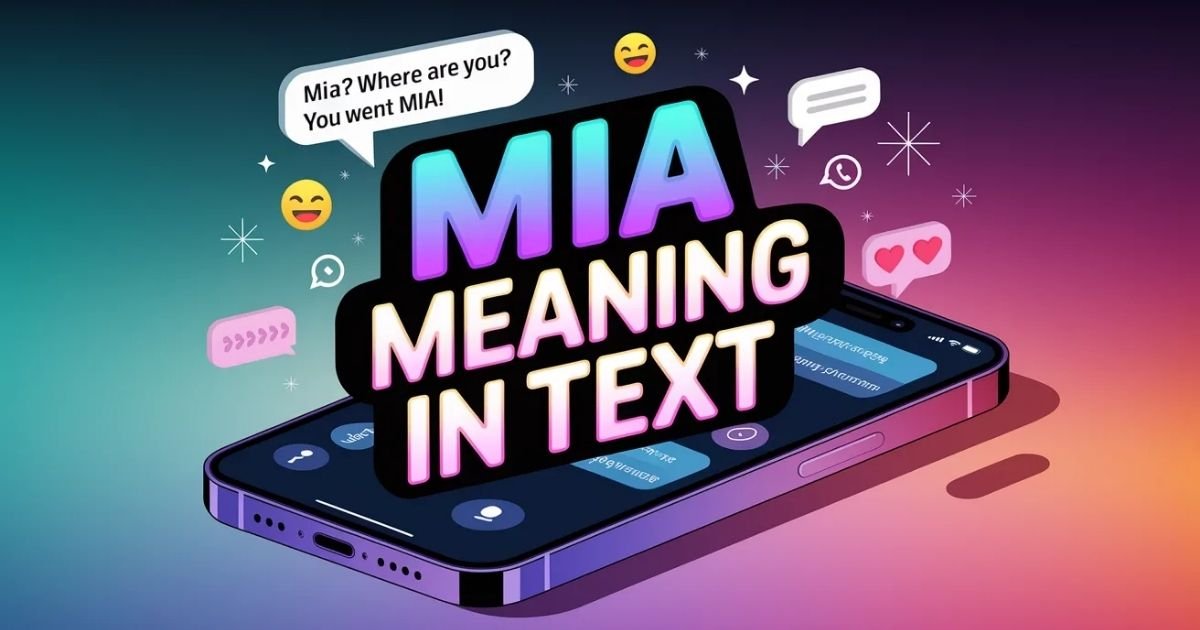
MIA Meaning in Text: Explained with Examples
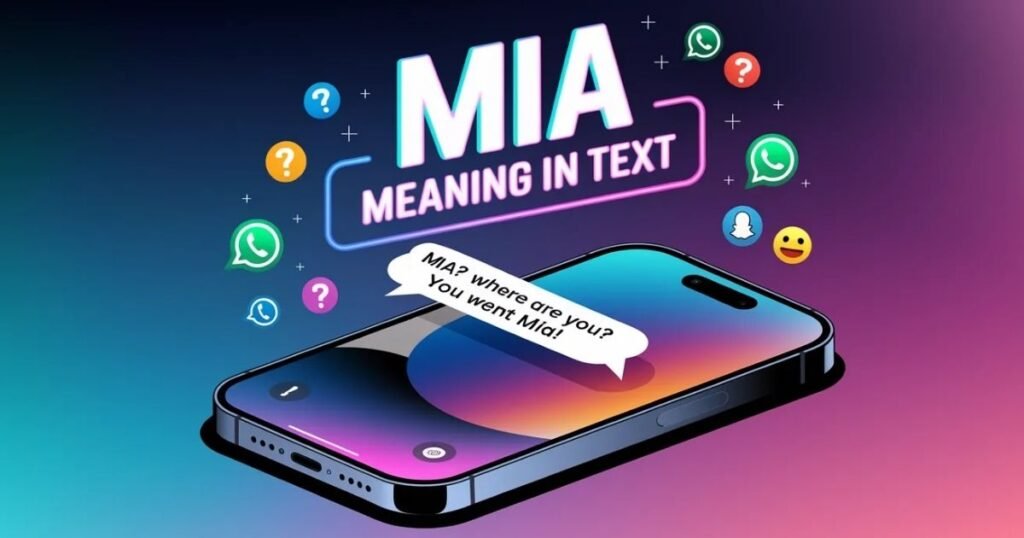
Ever text someone and suddenly… they vanish? That’s called going MIA. But what does it really mean when someone is MIA in texting or social media? This guide breaks it down with examples, platform-specific usage, and tips for using MIA naturally.
In texting, MIA stands for “Missing in Action.” It describes someone who disappears from a conversation without explanation. This acronym, originally a military term, is now a staple in casual digital communication, especially among teens and young adults.
What Does MIA Mean in Text Messages?
MIA = Missing in Action.
- Used when someone suddenly stops responding or disappears online.
- Originally described soldiers unaccounted for in battle.
- Today, it’s casual slang to describe temporary disappearances in chats or social media.
Example:
“Sorry I went MIA! Work got crazy this week 😅”
ALSO READ: TF Meaning in Text: Complete Guide to This Popular Texting
Common Usage in Digital Communication
People use MIA across all major messaging platforms:
- SMS text messages: “Where have you been? You went MIA for three days!”
- WhatsApp: “Sorry I went MIA, my phone died”
- Snapchat: “Why are you MIA? Your snap streak is dying”
- Instagram DMs: “You’ve been MIA on here lately”
- TikTok comments: “This creator has been MIA for weeks”
The meaning stays consistent across platforms—someone has disappeared from the conversation or social media presence.
MIA as Slang: Formal or Informal?
MIA is definitely informal slang. You wouldn’t use it in professional emails or formal writing. It’s conversational language that belongs in casual chats with friends, family, or peers.
Formality Level
Informal contexts (appropriate):
- Texting friends
- Social media conversations
- Casual group chats
- Talking to classmates or coworkers you’re friendly with
Formal contexts (not appropriate):
- Business emails
- Academic writing
- Professional reports
- Communication with supervisors or clients
Think of MIA as part of your casual vocabulary, not your professional one.
Real-Life Texting Examples
Understanding how people actually use MIA helps you use it naturally. Here are authentic examples:
1:
- Person A: “Did you finish the group project?”
- Person B: “No, Jake went MIA and didn’t do his part”
2:
- “Sorry I’ve been MIA! Work has been crazy this week 😅”
Example 3:
- “Sarah’s been MIA since the party. Should we check on her?”
4:
- “You can’t just go MIA when we’re making plans!”
5:
- “My ex went MIA after our last date. Guess that’s my answer 🙄”
6:
- “The WiFi went out, so I was MIA for a few hours”
These examples show MIA can describe temporary disappearances or longer absences, and can carry different emotional tones depending on context.
Grammar and Usage: How MIA Works in Sentences
Part of Speech
MIA functions as an adjective or as part of a verb phrase in texting language.
As an adjective:
- “He’s been MIA all week” (describing the person’s state)
In a verb phrase:
- “She went MIA” (describing an action)
- “Don’t go MIA on me” (command/request)
Sentence Position
MIA typically appears:
- After “be” verbs: “I’ve been MIA”
- After “go/gone”: “You went MIA”
- In questions: “Why are you MIA?”
- As a descriptor: “Our MIA friend finally texted back”
Tone and Connotation
The tone of MIA varies based on context:
Neutral/Explanatory: “Sorry, I went MIA—family emergency”
Slightly annoyed: “You’ve been MIA when I needed you”
Joking/Light: “Look who’s back from being MIA! 😄”
Concerned: “Are you okay? You went MIA suddenly”
The surrounding words and emojis usually clarify the intended tone.
MIA vs. Similar Terms: What’s the Difference?
People often confuse MIA with other texting terms. Here’s how they differ:
| Term | Meaning | Usage Context | Key Difference |
| MIA | Missing in Action | Someone who disappeared from communication | Emphasizes complete absence |
| AFK | Away From Keyboard | Temporarily unavailable while online | Used mainly in gaming/computer contexts |
| BRB | Be Right Back | Short, announced absence | Person tells you they’re leaving |
| Ghost/Ghosting | Deliberately ignoring someone | Intentionally cutting off contact | Implies intentional avoidance |
| Offline | Not connected to internet | Technical unavailability | Neutral, no social implication |
| Radio Silent | Not communicating | Extended period without contact | More dramatic, implies deliberate silence |
Key distinction: MIA suggests someone disappeared unexpectedly, while BRB is announced, ghosting is intentional, and AFK is platform-specific.
Who Uses MIA in Texting?
Age Groups
Primary users (13-35 years old):
- Teenagers and young adults use MIA most frequently
- Millennials and Gen Z incorporate it naturally into conversations
- This generation grew up with texting as primary communication
Occasional users (35-50 years old):
- May use it but less frequently
- More likely to spell out “missing in action”
- Adopting it from younger friends or coworkers
Rare users (50+ years old):
- Less familiar with the acronym
- Might not understand it without context
- Prefer complete phrases
Regional Usage
MIA isn’t region-specific—it’s used globally wherever English texting happens:
- United States
- United Kingdom
- Canada
- Australia
- India
- Philippines
- Anywhere English is a primary digital language
The internet has made MIA universal slang across English-speaking communities.
Platform Preferences
Most common on:
- Instagram DMs
- Snapchat
- iMessage/SMS
- Discord
Less common on:
- LinkedIn (too informal)
- Email (professional settings)
- Formal social platforms
MIA Meaning on Snapchat Specifically
On Snapchat, MIA carries special significance because of snap streaks and story viewing.
When someone goes MIA on Snapchat, it usually means:
- They stopped viewing your stories (even though they’re active)
- Your snap streak is at risk because they’re not responding
- They haven’t posted on their story for an unusual length of time
- They’re not opening your snaps despite being online
Snapchat users are particularly sensitive to MIA behavior because the platform emphasizes constant, daily interaction.
Example: “She’s been MIA on Snap but I see her posting on Instagram 👀”
This suggests selective ghosting rather than true unavailability.
Understanding Context: Why People Go MIA
Knowing why people go MIA helps you interpret the term correctly:
Common reasons:
- Phone died or got lost
- Too busy to respond
- Overwhelmed by messages
- Needed a social media break
- Something important came up
- Accidentally forgot to reply
- Avoiding a specific conversation
- Internet/data issues
- Traveling or out of range
The reason matters for how you should react to someone being MIA.
How to Use MIA Correctly in Your Texts
When to Say You’re MIA
Apologizing for absence:
- “Sorry I went MIA, things got hectic!”
- “My bad for being MIA yesterday”
Explaining your situation:
- “I’ll be MIA this weekend—camping trip with no service”
- “Going MIA for finals week, talk after!”
When to Call Someone Else MIA
Checking on them:
- “Hey, you’ve been MIA. Everything okay?”
- “Just making sure you’re alright since you went MIA”
Light complaint:
- “You can’t go MIA right before the deadline!”
- “Where have you been? Total MIA move”
Describing to others:
- “Can someone else do it? Tom’s been MIA”
- “Lisa went MIA so we started without her”
Related Terms and Variations
Understanding related expressions helps you grasp the full picture:
“Going MIA”: The act of disappearing from communication
“Been MIA”: Past tense, describing recent absence
“Pulling an MIA”: Making a habit of disappearing
“MIA mode”: Intentionally avoiding messages
“Going MIA on someone”: Specifically avoiding one person
SEO-Friendly FAQs About MIA in Texting
What does MIA mean in text?
MIA means Missing in Action in texts. It describes someone who stopped responding or disappeared from conversations without any warning.
Is MIA rude to say?
MIA isn’t rude by itself. Context matters though. Saying it playfully is friendly, but using it accusatorially can sound harsh or judgmental.
What’s the difference between MIA and ghosting?
MIA is temporary and often unintentional disappearance. Ghosting is deliberately cutting contact permanently. MIA is neutral while ghosting implies intentional avoidance behavior.
Can you use MIA in professional messages?
Avoid MIA in formal professional communication. Use unavailable or unreachable instead. Save MIA for casual workplace chats with friendly coworkers only.
How long does someone have to be gone to be MIA?
No specific timeframe exists. It’s relative to your normal communication pattern. Context and expectations determine what actually counts as being MIA.
What should I say when I’ve been MIA?
Simple acknowledgment works best: “Sorry I went MIA!” Brief explanations help like “Phone died” or “Family stuff” but elaborate justifications aren’t necessary.
Why do people go MIA on social media?
People go MIA for mental health breaks, focusing on priorities, feeling overwhelmed, going through personal issues, or simply losing interest in platforms.
Is saying someone went MIA the same as calling them out?
It depends on delivery. Factually stating it is neutral observation. Adding emphasis like “again” or sarcasm sounds like criticism or calling out.
What does MIA mean for Gen Z?
For Gen Z, MIA means someone disappeared from digital spaces temporarily. They use it casually without drama, often announcing their own MIA status.
What does it mean to go MIA on social media?
Going MIA on social media means stopping all posting, commenting, and interaction. You essentially vanish from the platform without any prior announcement.
What are other possible meanings of MIA?
Besides Missing in Action, MIA is also a popular girl’s name, an airport code for Miami, and occasionally means Miami in abbreviations.
What does it mean to be MIA?
Being MIA means you’re unreachable or unresponsive in communication. People can’t contact you or you’re not replying to messages and calls.
Summary: Understanding MIA in Modern Texting
MIA = Missing in Action, casual texting slang
Informal, mostly used by ages 13–35
Tone varies: neutral, annoyed, joking, or concerned
Differs from ghosting (intentional) and BRB (announced)
Can describe yourself or others temporarily disappearing
Use MIA naturally, with context or emojis, and avoid overuse in professional or formal settings.al communication more effectively. Whether you’re the one going MIA or wondering where your friend disappeared to, you now know exactly what this popular acronym means and how to use it naturally.